The fracturing of London’s politics

Hi, Elliot here. I work on the team behind Datawrapper’s charting code, and in this Weekly Chart, we’re taking a crash course in regional U.K. politics.
Last week, elections took place across the United Kingdom, including for local councils in some parts of England and regional parliaments in Scotland and Wales. The story emerging from these results is a splintering of the U.K.’s two-party system.
For over a hundred years, the Labour and Conservative parties have dominated national politics, helped in part by a first-past-the-post voting system that puts smaller parties at a disadvantage. While not quite as binary as U.S. politics, typically one of the two main parties wins a majority at each national election, and coalitions are rare.
This, however, is changing. It’s particularly evident in maps of my home city of London, where in the 2026 local elections, a fall in support for the Labour Party has coincided with the rise of two smaller parties. After local elections in 2022, most councils were controlled by left-wing Labour (red), with the right-wing Conservatives (blue) and centrist Liberal Democrats (orange) holding onto a few councils each. But this year, that map shows many more colours.

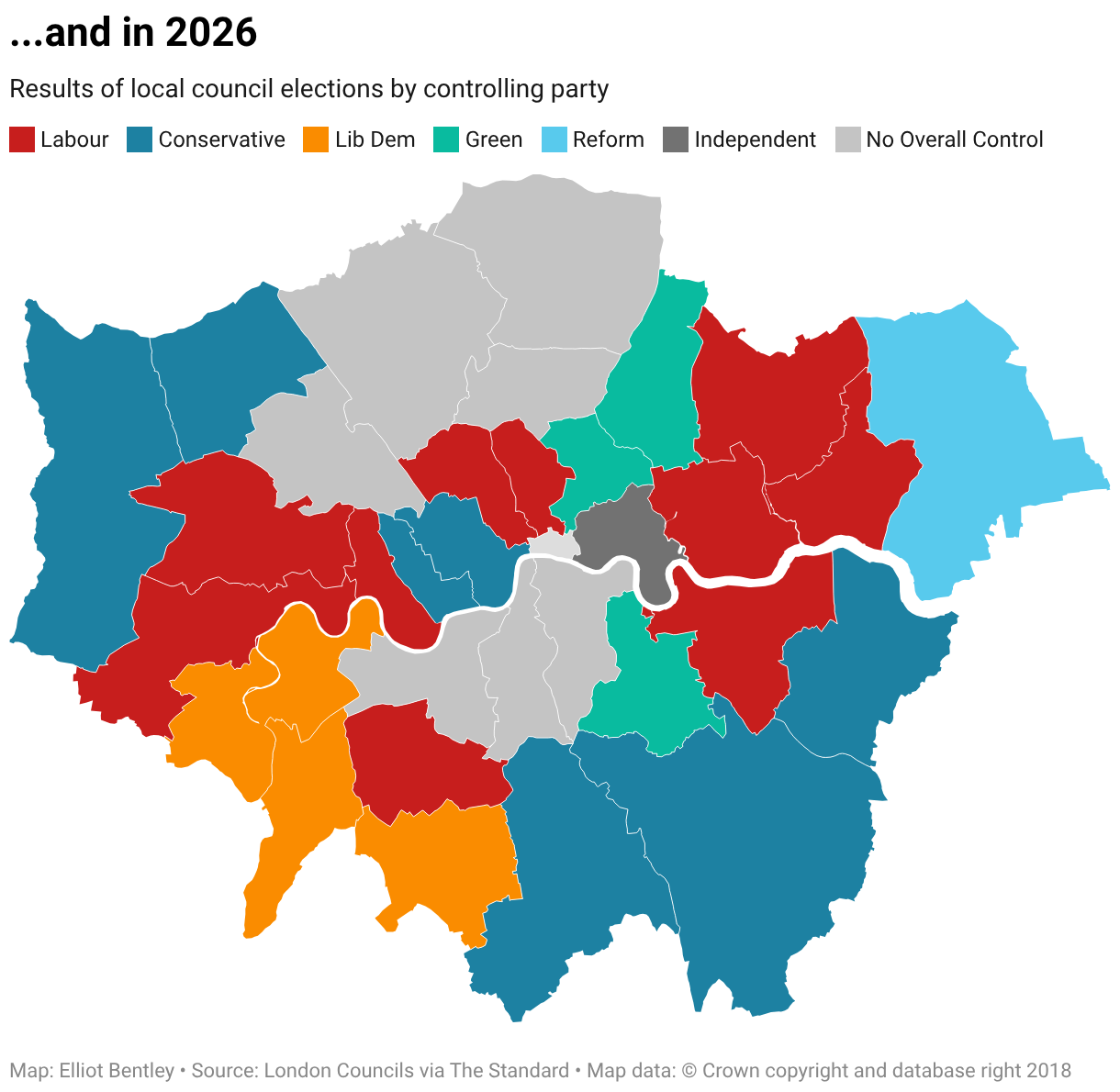
The further-left-wing Green Party (green) and further-right-wing Reform UK (pale blue) went from almost no representation across London’s councils to now having outright control of several. Parties need half of a council’s seats to take overall control, but in many of London’s councils, no party was able to gain a majority of available seats (shown in light gray) — which will likely require members of those councils to form coalitions.
Local councils control everyday public services such as trash collection, social care, and approving building construction. They don’t wield a huge amount of power, but these results still tell us a lot about the direction that the politics of London (and the nation in general) is heading.
Labour still controls the most councils across the city, but even there, their majorities have been reduced, reflecting a nationwide drop in support since coming into government in 2024. The party lost overall control of several former strongholds, such as Haringey, which had been consistently under Labour control for 55 years, and in Hackney, where the Green party broke Labour’s 24-year streak.


Conservatives, still reeling nationally from a collapse in support since 2020, were able to keep hold of existing councils. But their victory in Westminster was due to Labour’s losses rather than any gains of their own: the Conservative share of the vote in that race was down 5%.


Liberal Democrats, a centrist party that has long been in third place behind Labour and the Conservatives, made modest gains but didn’t pick up any new councils. The Lib Dems are especially popular in the wealthy parts of England to the south-west of London.


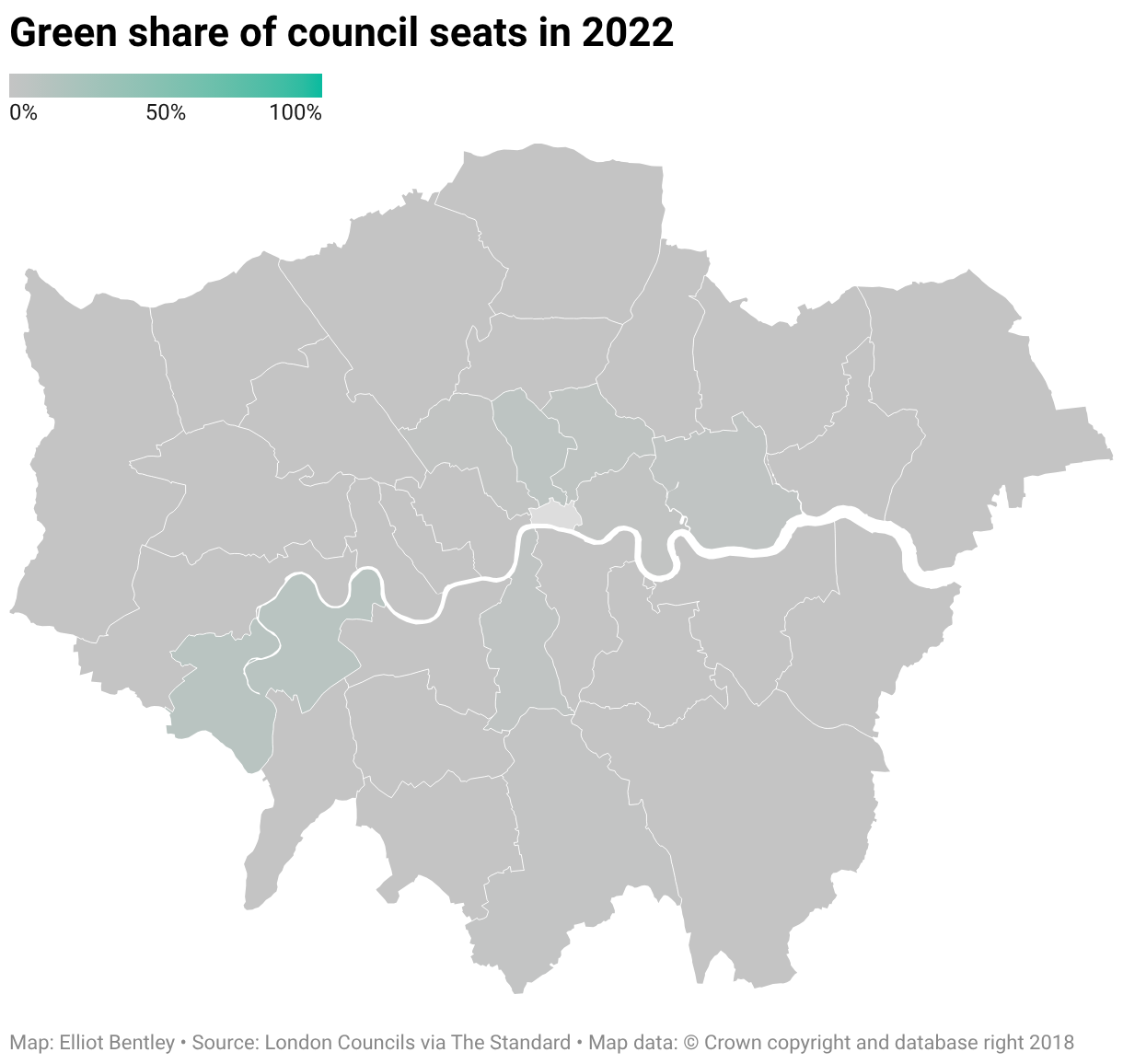
The biggest gains were made by the Greens, who for a long time have been seen as a fringe party locked out of mainstream politics. They went from 17 seats in 2022 to taking four councils from Labour (plus a couple of mayoralties, too).

Reform UK, a newer party formerly known as the Brexit Party, enjoyed high support elsewhere in the country but made relatively modest gains in London.


London’s new, fractured political landscape is not fully representative of the rest of the country. The collapse in support for Labour was even greater outside of the capital, as support for Reform surged nationally.

The next U.K. general election, which affects control of parliament, isn’t until 2029. But these local elections are already shaping the next few years of national politics: it’s quite possible we will get a new prime minister in the near future.
That’s all for this week! Come back next time for a chart by fellow U.K. resident Ceren.


