“Verify you’re an adult to access this content”
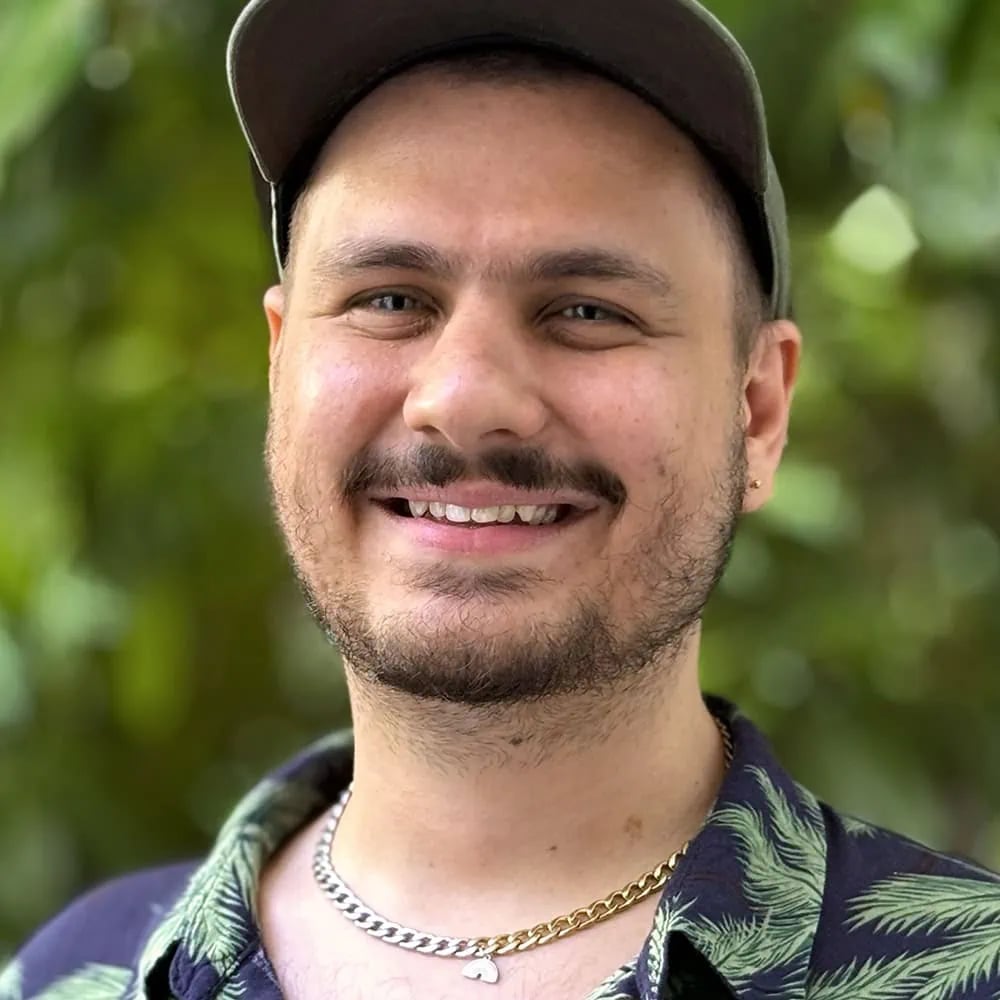
Hello everyone! I’m Toni from the app team here at Datawrapper. Today, I want to highlight the complex and, in my opinion, under-discussed topic of age verification laws that are being rolled out around the world right now.
By now, we probably all know that social media isn’t all sunshine and roses. Who doesn’t know the feeling of being sucked into the endless scroll loop, trying to escape the discomfort of boredom by reaching for our digital regulation rectangles, only to feel like a shell of a human at the end of it, more disassociated and depleted than before? Well, at least I do.
While it’s good for connecting with people who aren’t around physically, social media has grown to be a highly effective attention extraction industry, selling our eyeballs to the highest bidder.
The concern that children are especially vulnerable to its dangers, including unrealistic body image standards, cyberbullying, and online predators, is understandable. In an attempt to address the harms of social media use for children, multiple countries have passed laws to require age verification for social media accounts.

Digital age verification quickly becomes a complex topic. The many different forms of these laws alone are difficult to keep track of: the United Kingdom, for example, only banned “harmful content” for children, while Australia banned social media access for children completely. Some laws allow children to create accounts, but only with their parents’ consent. (I’m glad I’m not an engineer at a social media company, as it seems like a complete technical nightmare to keep implementing these never-ending changes.)
Besides social media, some U.S. states like California and Colorado have passed laws that require operating systems to collect the age of users and expose this to applications. There is also a federal bill on the way. Apparently, Meta invested a boatload of cash to kick the burden of age verification down the road to Apple, Google, and Microsoft, but possibly also open source solutions like Linux, that would need to comply.
Age verification becomes a privacy concern for everyone
But to make age verification effective, you also need to verify identity. This makes it a privacy concern for everyone trying to access blocked sites, not just the children it’s said to protect.
In the European Union, France, Denmark, Greece, Spain, and Italy all seem eager to bring similar bans into effect, and recently, the European Commission announced its supposedly anonymous open source age verification app was “technically ready”. It’s good that it is open source, since critical security flaws were discovered within minutes.
However, even if the app were water-tight, security experts believe this is fundamentally the wrong approach to the problem. The key here is Virtual Private Networks (VPNs), which protect users’ privacy online via an encrypted connection and can bypass a country's verification requirements by simply tunneling to a different country.

We've seen this everywhere — from states like Florida, Missouri, Texas, and Utah, to countries like the United Kingdom, Australia, and Indonesia.
Utah is now also making it illegal to use VPNs to avoid the age gate. However, technically, this doesn’t appear to be feasible. As EFF writes, “blocking all known VPN and proxy IP addresses is a technical whack-a-mole that likely no company can win.” (For example, China is using deep packet inspection, DNS poisoning, IP blocking, and port blocking to block VPNs from bypassing its “Great Firewall”, but some VPN services are dedicated to this digital arms race.)
Who decides what’s harmful and what’s just (politically) inconvenient?
As a queer person, this also hits very close to home. Who gets to decide what is “acceptable” for children? We’ve already seen young people being barred from accessing LGBTQ content. These communities and resources are critical and even life-saving for marginalized people. According to EFF, “when lawmakers and advocacy groups frame queer existence itself as a threat to young people, age-verification laws become ideological enforcement instead of regulatory policy.”
And we've even been here before: after public backlash, Hollywood introduced its self-censorship Hays Code, under which “inference of sex perversion” is forbidden, forcing filmmakers to resort to queer-coding characters without explicit queer visibility. This was later amended to allow for “sensitive representation of homosexuality”, if they ”die in the end”.
Banning behaviors is an easy way out
As far as I know, straight-up bans never seem to work. Be it drugs, sex work, or abortions, people will seek out alternative ways to get what they want or need, leaving them in a more vulnerable position than before. Studies already suggest that age-verification laws don’t keep minors away from adult sites, so why exactly are we willing to give up everyone's privacy? A brand new study shows that only one in four teenagers is actually complying. It’s incredibly frustrating to see “children's safety” be used as such an effective excuse.
And what also annoys me in this whole debate is that we act like social media only negatively affects children. Sure, children are most at risk, but adults aren’t immune. As I stated in the beginning, I personally feel its negative effects, and many adult friends around me do as well.
Why are we expected to hold all responsibility for being exploited by a gigantic industry? I’m extremely grateful that Estonia is taking a stand for human rights and advocates for enforcing existing laws, before we tear away our rights in a brute-force attempt to help children.
Okay, enough ranting… Thanks for reading! I hope I shed light on some of the current developments, and especially the problems with these age-based bans. What do you think about the proposed laws? Feel free to reach out at antonio@datawrapper.de, and be sure to visit again next week for a fresh new Weekly Chart from our visualization developer Elliot!