People are still dying, we just stopped paying attention

Hi, this is Gustav from the design team. I’m the kind of person who often scrolls through social media to keep track of current events. But once the dust settles and the news cycle moves on, I tend to forget, and I'm sure I'm not alone. So this week, we take a look at a tragedy I forgot about, which is still going on in the Mediterranean Sea.
We all remember the pictures that went around the world ten years ago: packed boats, lifeless bodies, and the vast sea. So many people who left their homes seeking a better life in Europe never reached the shore.
The migration routes across the Mediterranean have been used since the 1990s, but incidents have only been systematically documented since 2014, following two deadly shipwrecks a year earlier. Here's what data collected by IOM's Missing Migrants Project tells us:


Globally, about 42% of migrants who die while making the journey lose their lives in the Mediterranean, although this percentage might not tell the whole story. While the Mediterranean route receives media coverage and government agency attention, experts believe that deaths of those trying to cross the Sahara go unrecorded and might be comparable to those from the Mediterranean Sea.
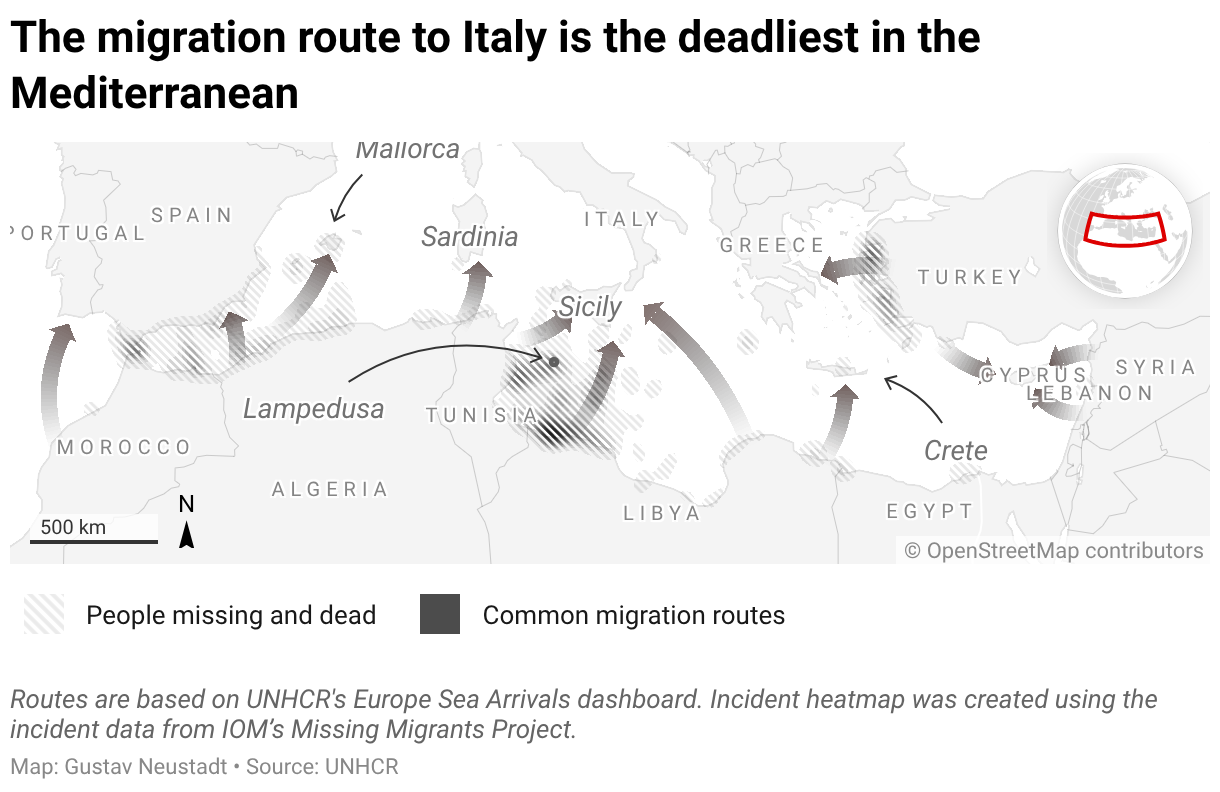
Since 2014, at least 34,000 people have lost their lives in the Mediterranean, but organizations explicitly say that the real number could be much higher. The deadliest shipwreck in recent history happened in April 2015. 1,100 people took off on an overloaded fishing boat from a beach in Libya and headed to Sicily, Italy — the destination they hoped to reach — but only 28 of them survived.

Back in 2015, when the shipwreck happened, European news outlets focused heavily on the situation. But once other events, like the COVID pandemic, took over, media interest declined. Meanwhile, the number of incidents and lives lost actually increased in the past ten years. Even though we saw a decline last year, 2026 has already had the deadliest start of the year, with at least 682 people dead or gone missing.


In recent years, it has become more and more difficult to get our hands on reliable data. Coastal countries and their border and migration agencies seem to be looking away and communicating less about this issue. That is why migration organizations struggle with getting a clear picture of the current situation.
I've always known that many people die in the Mediterranean Sea, but when it stopped showing up on the news, I assumed the situation had improved. Seeing the numbers, and especially the individual incidents on the map, showed me just how bad the situation continues to be. And although the topic is more complex than what these maps and charts could visualize, it's important that we don't forget that people are still dying at sea while seeking a better life.
That's it from me for today. Come back next week for a Weekly Chart from our recently returned head of communications, Lisa!


